Gdynia to Sicily on a Vulcan 1700: 4,200 km Without an Inch of Gravel
When you pilot a full-dress touring cruiser weighing well over half a metric ton with a pillion passenger and three packed hard cases, the word "adventure" means something completely different than it does on a lightweight enduro bike. On a Kawasaki Vulcan 1700 Voyager, touring nirvana is all about flowing corner rhythm, predictable footing whenever you put your boots down, and absolute certainty that smooth asphalt will not suddenly vanish around a blind bend. Here is the story of our three-week, 4,200-kilometer journey from Gdynia on Poland’s Baltic coast all the way to Mount Etna in Sicily and back via Slovenia—planned from start to finish in routes4moto.
The Tuscan Gravel Nightmare That Changed How We Plan Routes
Switching to a dedicated motorcycle planner came after a nerve-wracking lesson the previous summer. A mainstream car navigation app set to "avoid highways" decided to save us four minutes in Tuscany by cutting across vineyard hills. Three kilometers in, narrow tarmac dissolved into a 15% incline of deep, loose white gravel and fist-sized stones. Wrestling a 400 kg V-twin tourer around two-up on a steep cambered track cost us an hour of pure adrenaline and a soaked riding shirt.
For this year’s Sicilian expedition, I built all fourteen daily stages in routes4moto using the curvy profile paired with the strict Paved Roads Only (avoid_unpaved) filter. By auditing OpenStreetMap surface tags segment by segment, the routing engine automatically rejected unpaved Italian strade bianche, farm concrete strips, and rough forestry shortcuts. Across six countries and 4,200 kilometers, we never once had to execute an emergency U-turn at the edge of a gravel track.
4,200 km Across 6 Countries: Baltic Coast to Mount Etna and the Julian Alps
Rolling out of Gdynia at dawn, we quickly traded expressways for the rolling country ribbons of southern Czechia and Moravia. By day three we crossed Austrian Carinthia into the Italian Dolomites, selecting wide, well-surfaced mountain passes suited to long-wheelbase cruisers rather than single-track goat paths. From there our line traced the spine of the Apennines through Umbria and Campania before dropping onto the dramatic coastal cliffs of Amalfi and Calabria overlooking the Tyrrhenian Sea.
After the short ferry crossing from Villa San Giovanni to Messina, Sicily welcomed us with dark volcanic tarmac curling up the southern flanks of Mount Etna—offering race-track grip and unforgettable sea views. Our northern return followed the Adriatic coast into Friuli and across the border into Slovenia’s emerald Soča Valley, easily one of the finest sweeping cruiser corridors anywhere in Europe.
Automatic 160 km Fuel Stops and 3D Cockpit Navigation in Tight Hairpins
A big 1,700 cc V-twin climbing mountain passes in summer heat has a healthy appetite for unleaded, and in southern Italy smaller village stations often close during afternoon siesta or sit tucked inside narrow cobbled streets bordered by restricted traffic zones (ZTL). In routes4moto, I configured automatic fuel stops every 160 km directly along our route corridor.
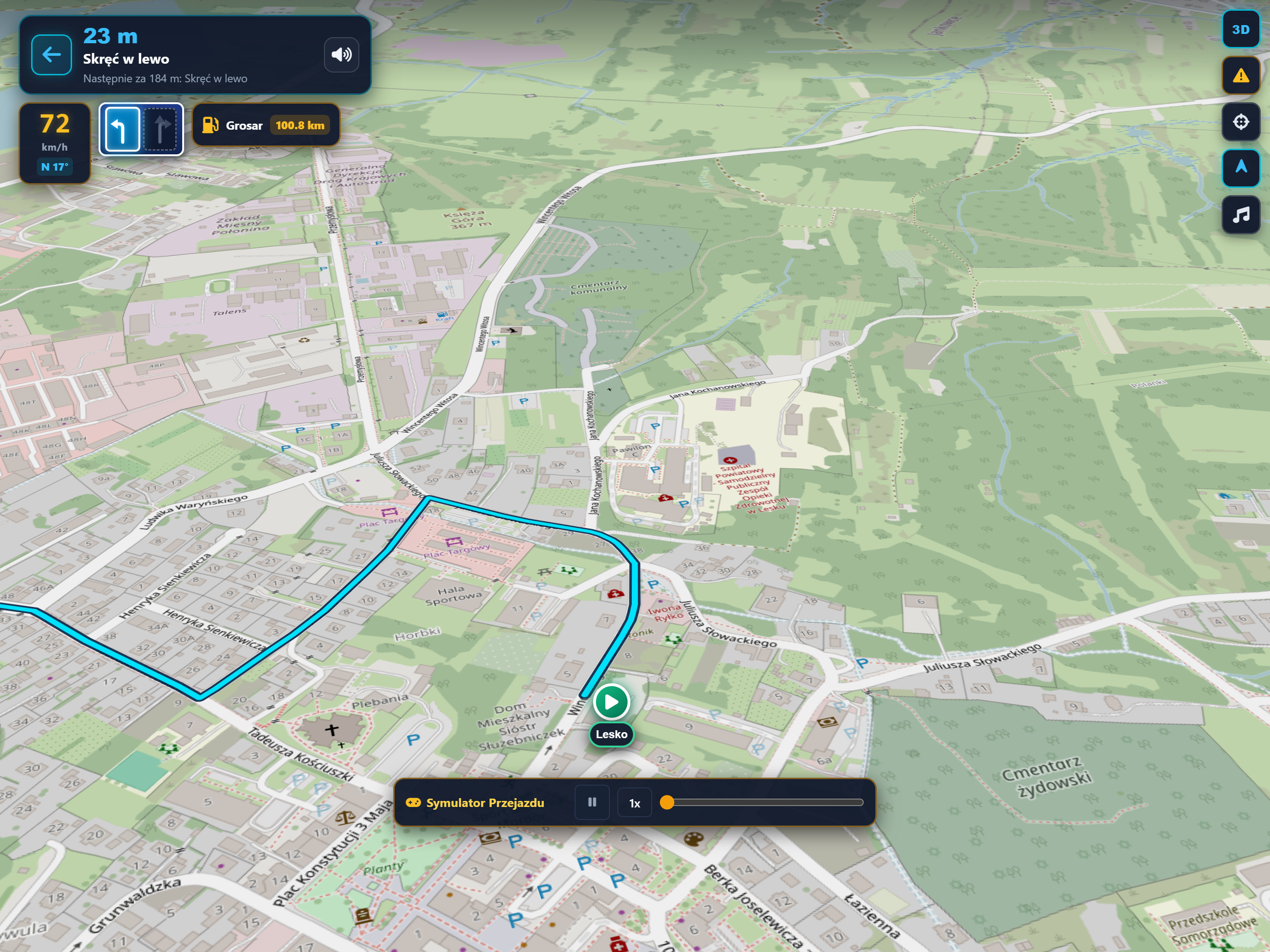
Every suggested station sat right beside the main road with wide pull-through lanes—zero awkward multi-point maneuvers on steep town squares. Mounted above the handlebar gauges, the high-contrast 3D Cockpit navigation proved equally invaluable: seeing the tightening geometry of upcoming hairpins in the Apennines and Calabria several hundred meters early let me downshift smoothly, set our entry speed, and carry clean lines all afternoon.
Marek’s 5 Practical Lessons for Heavy Cruiser & Grand Tourer Riders
- Save "Paved Roads Only" as your default account preference: that way even quick midday reroutes on the roadside will never sneak an unpaved shortcut into your itinerary.
- Set fuel range with a 25% safety margin: steep mountain climbs and headwinds increase consumption, and stopping every 160 km keeps both rider and pillion fresh.
- Check ETA Route Weather before Alpine and Apennine stages: shifting one Austrian morning start by an hour let us ride behind a passing thunderstorm on drying roads.
- Keep curvy daily stages around 320–400 km: in mountain terrain, saddle hours matter far more than raw distance—leave room for coastal viewpoints and local espresso stops.
- Keep a GPX 1.1 backup synced alongside your phone cockpit: having offline routes stored in your account gives total peace of mind on ferries and remote passes.
Want to Feature Your Motorcycle Expedition on the routes4moto Blog?
Send us your trip story, favorite photos from the road, and the link to your route built in routes4moto at kontakt@routes4moto.com. Selected stories are published here and awarded a special community badge on your rider profile!